


New global report: What sustainability literacy trends tell us about Higher Education in 2026
As the global community gathers once again at the High-Level Political Forum (HLPF) to review progress towards the Sustainable Development Goals (SDGs), one question remains central:
How can higher education better prepare learners to address the complex sustainability challenges of today and tomorrow?
At Sulitest, we contribute to this conversation each year through two initiatives: our annual HLPF event and the publication of our global report, which analyses trends in sustainability literacy and shares insights from institutions using TASK™ (The Assessment of Sustainability Knowledge).
This year's report combines evidence from hundreds of thousands of learner assessments with insights from our recent research on sustainability curriculum transformation (which we explored in a three-part blog series 1,2,3). Together, they paint a consistent picture: improving sustainability literacy requires sustained institutional commitment, coherent curriculum design, and assessment practices that actively support learning.
What the latest data tells us
100,000 TASK™ assessments have been completed to date.
Drawing on the assessments completed between July 2025 and April 2026, this year's report identifies that sustainability literacy continues to improve, with the adjusted average score increasing to 57.84, representing a modest improvement compared with last year.
The data also reveals important patterns across sustainability topics.
- Learners consistently perform strongest on subjects related to Human Welfare, including health, inequality and social inclusion.
- Topics within Levers of Opportunity—the governance, economic and transformational mechanisms needed to drive systemic change—remain comparatively weaker.
- Results within Earth Systems are more varied, with some ecological topics well understood while others remain among the lowest-scoring areas.
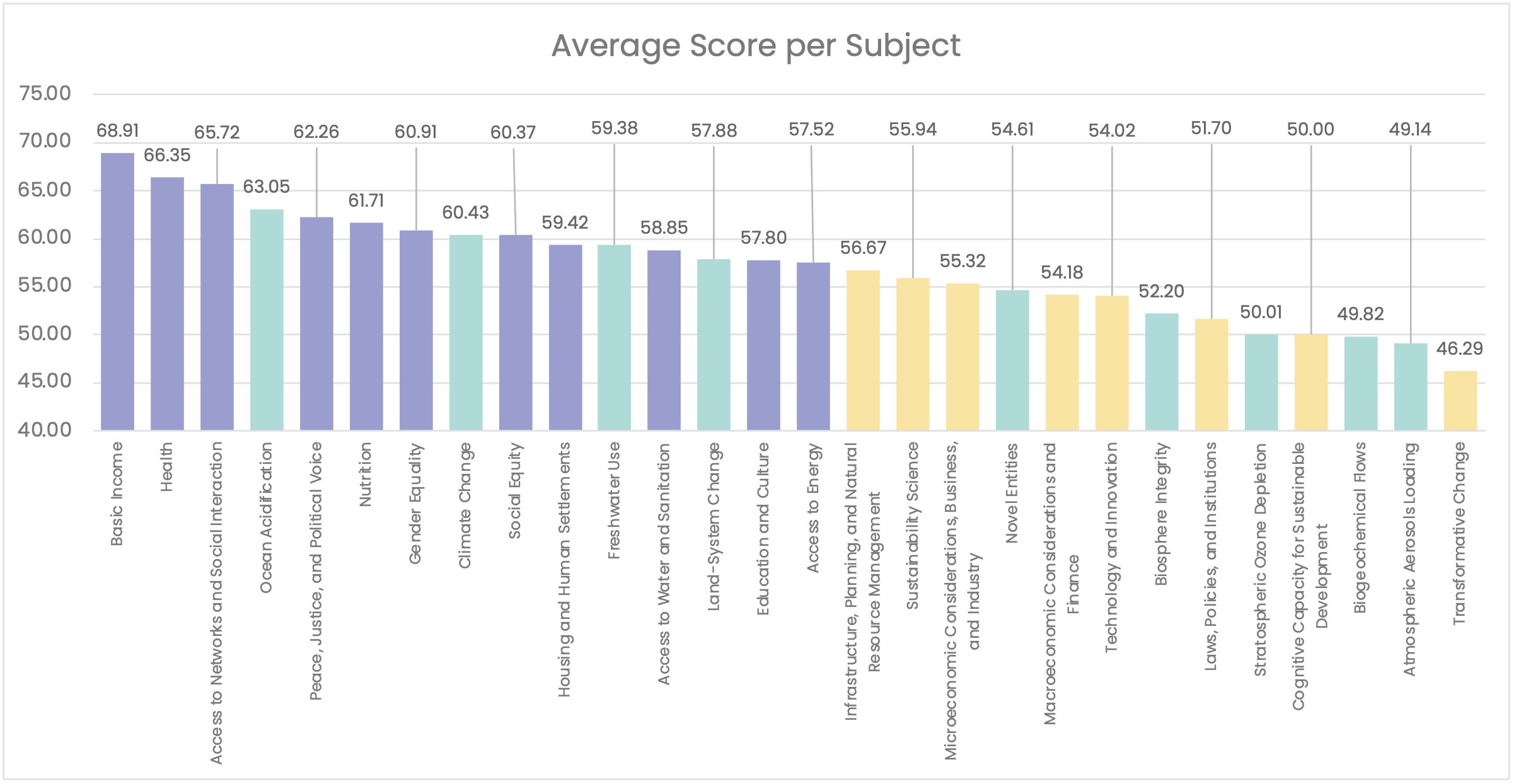
Taken together, these findings suggest that sustainability literacy in higher education is currently more socially oriented than systems oriented. While many students are comfortable engaging with questions of equity and wellbeing, understanding complex ecological interdependencies and societal transformation remains more challenging.
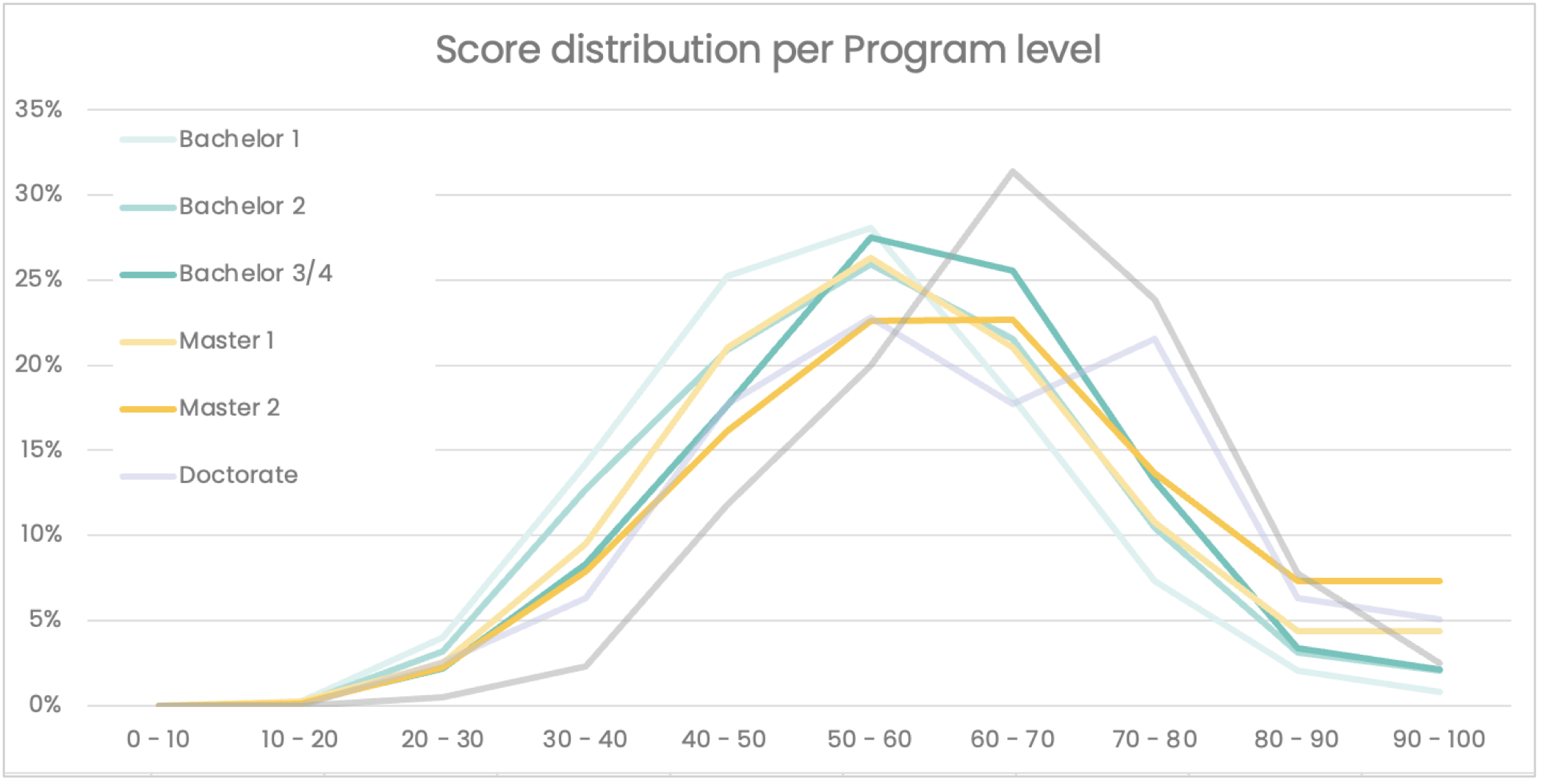
Across programme levels, sustainability literacy generally increases from early undergraduate study through to Master's programmes, indicating that sustained exposure throughout higher education contributes to stronger understanding. However, considerable overlap between programme levels also demonstrates that institutional context, disciplinary focus and learning opportunities remain important influences.
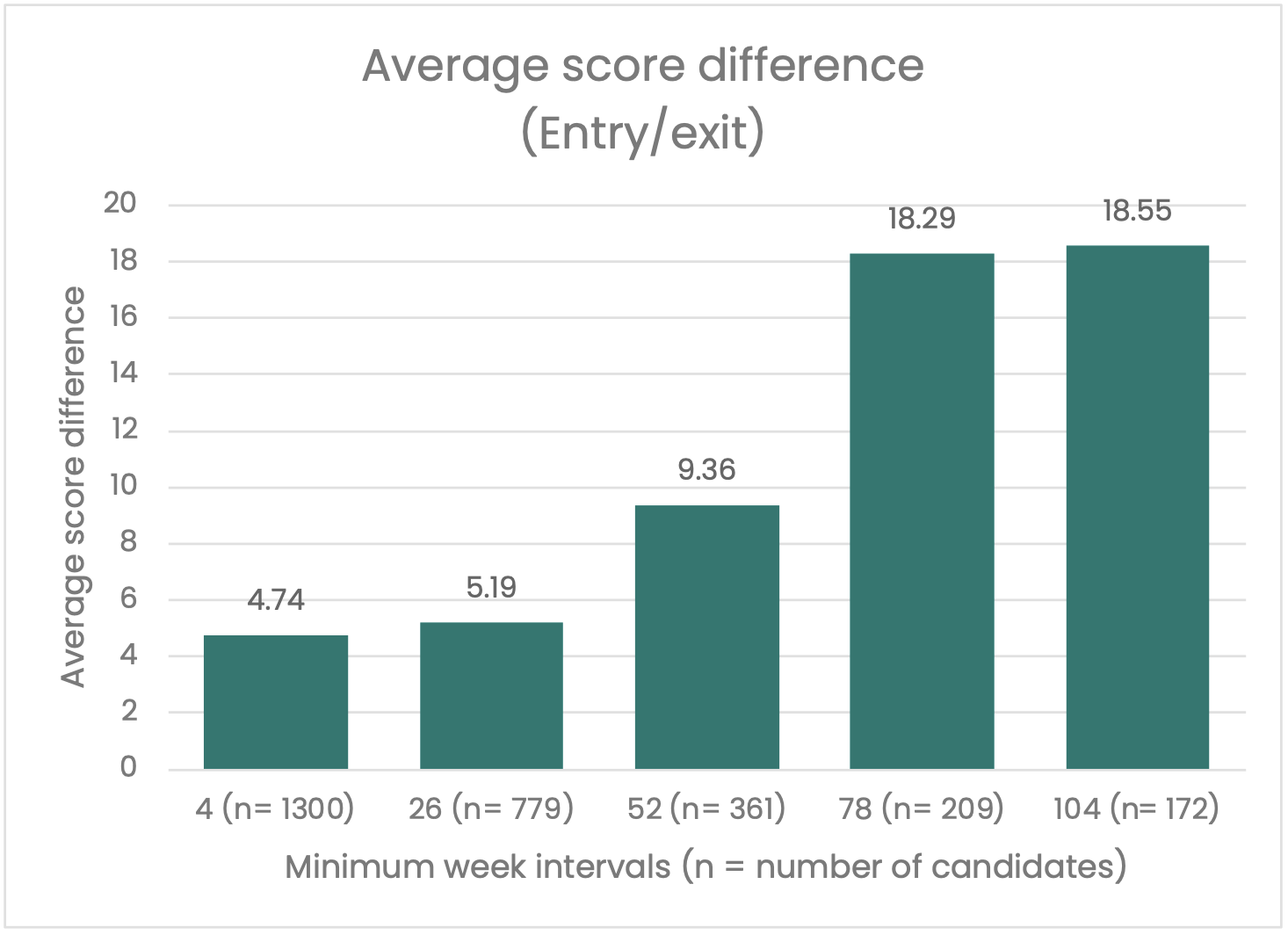
Perhaps one of the most significant findings comes from our longitudinal analysis. Students who complete TASK™ more than once demonstrate greater improvements when assessments are embedded across longer periods of study rather than administered within a single course or module. This reinforces a key recommendation emerging from both the research and the data: sustainability literacy develops progressively through repeated engagement over time.
Assessment as a driver of learning
One of the central messages of this year's report is that assessment should not simply measure learning—it should strengthen it.
When integrated throughout a programme, TASK™ can help institutions identify knowledge gaps, adapt teaching strategies, monitor learning progression, and demonstrate educational impact.
Entry assessments provide educators with valuable information about students' existing knowledge, allowing courses to be better tailored while personalised Study Guides help learners build essential foundations. Exit assessments enable institutions to evaluate the overall impact of their programmes. Between these stages, reflective activities and follow-up learning opportunities help transform assessment into an ongoing learning process.
This aligns with one of the report's broader recommendations: sustainability should be integrated horizontally across curricula rather than confined to isolated courses or modules. Building sustainability literacy requires continuous reinforcement across disciplines and throughout the student journey.
Read the full report
Our 2026 HLPF report brings together global trends, institutional case studies, research insights, and practical recommendations for higher education institutions seeking to strengthen sustainability education.
Whether you are designing curricula, leading institutional strategy, teaching sustainability, or evaluating learning outcomes, we hope the report provides evidence and ideas to support your work.
1. Where change happens: Embedding sustainability in academic programs
2. How universities integrate sustainability and accreditation frameworks to transform curricula
3. Barriers and levers for sustainability education

Our latest articles

Stay in the loop!
Are you interested in sustainability education, the latest news from our movement, or key events in the sector?
