


Reflections from the THE Global Sustainable Development Congress 2026
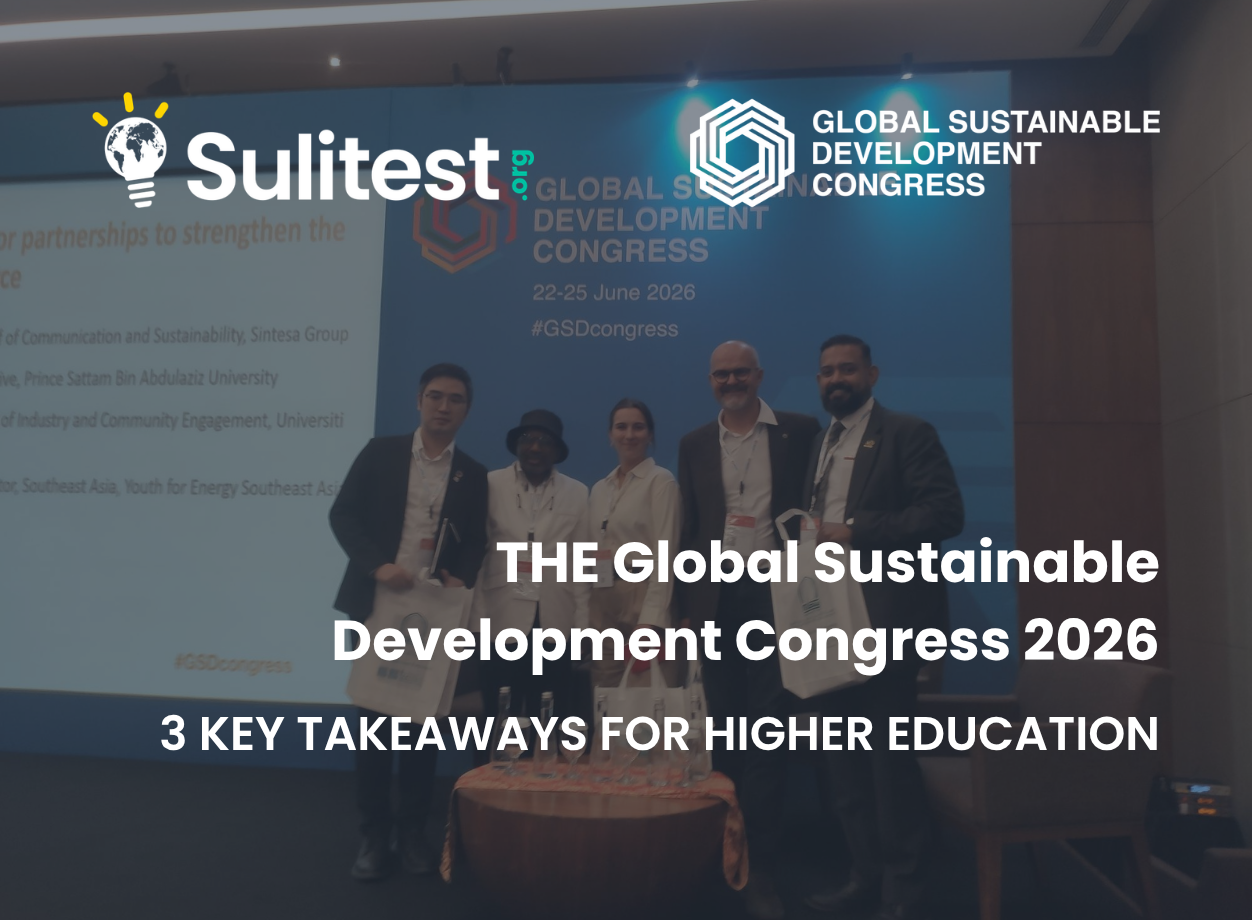
The Times Higher Education Global Sustainable Development Congress in Jakarta brought together universities, students, international organisations and industry partners committed to advancing the Sustainable Development Goals through higher education.
Beyond the keynote sessions and announcements, what stood out most were the conversations about what comes next. As the higher education community begins to look beyond the 2030 Agenda, one question kept coming back:
How do we accelerate the transformation of higher education for sustainability?
During the week, we had the opportunity to moderate several sessions, contribute to discussions around sustainability assessment, and engage with inspiring educators, students and partners from around the world.
Here are our three main takeaways.
1. Students must be recognized as partners in shaping higher education
One of the strongest messages of the week came from the HESI Student Action Group and the growing presence of students throughout the Congress.
Rather than simply inviting students to attend conferences, the discussions focused on creating meaningful opportunities for them to shape conversations, challenge existing approaches and co-design solutions.
Constantin Baltès, our Development & Partnerships Manager, had the pleasure of moderating a panel on expanding access to sustainability careers, bringing together representatives from universities, employers and students. Having student voices on the panel fundamentally changed the discussion. They did not simply react to existing ideas—they highlighted priorities that institutions sometimes overlook, particularly around employability, interdisciplinary learning and the transition from education to meaningful careers.
The HESI Student Action Group workshops reinforced the same idea: meaningful student participation should become an integral part of sustainability education rather than an occasional initiative. The Congress was the opportunity to hold the first Students General Assembly, a first milestone toward broader cooperation that involves students in the transformation of higher education.
As higher education prepares for the post-2030 agenda, empowering students as active partners—not passive beneficiaries—will be essential.
2. Measuring sustainability learning matters
Another highlight for Sulitest was our session dedicated to sustainability assessment.
Assessment is often viewed as a technical topic, but the discussions showed that it plays a much broader role. Measuring sustainability competencies allows institutions to understand where students are succeeding, where gaps remain, and how programmes can evolve.
The discussion with university leaders from the Education University of Hong-Kong, Prince Sattam Abdulaziz University and Sunway University pointed out that while data and assessments are important, they should not define a university. Rather, they serve as tools for reflection, benchmarking, and continuous improvement. Institutions must first understand their unique strengths, purpose, and areas of focus, and then leverage data strategically to measure progress and enhance impact.
To that end, assessment should not simply evaluate learning outcomes but should support institutional transformation by providing evidence for continuous improvement.
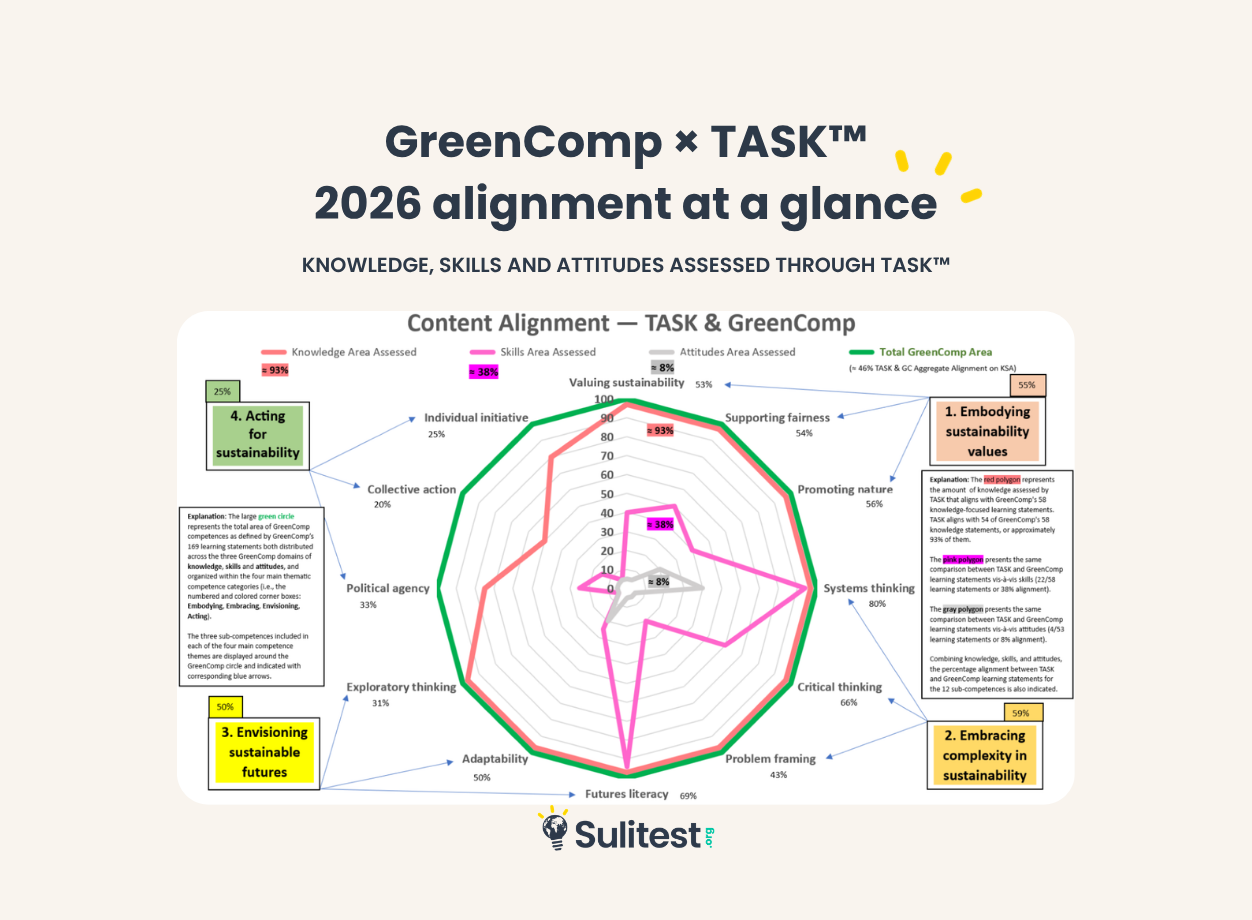
The presentation of insights from the latest TASK™ dataset by Jean-Christophe Carteron, Co-Founder of Sulitest, highlighted several encouraging trends across higher education. One particularly important finding was the increasing importance of interdisciplinarity. Sustainability challenges cannot be addressed from a single disciplinary perspective, and students increasingly need the ability to connect knowledge across fields.
With the release of the 2026 Sulitest report*, these insights will continue to inform universities seeking to strengthen sustainability education worldwide.
3. Collaboration remains our greatest opportunity
If there was one message that resonated throughout the Congress, it was the importance of collaboration.
The challenges we face in sustainability are simply too complex for any single institution, organisation or sector to address alone. Progress will depend on our ability to cooperate, share experiences and learn from one another. During the Congress, there was a genuine willingness to exchange ideas, compare approaches and explore opportunities for future partnerships. There was a shared understanding that we all have something to learn from each other.
This idea was strongly echoed by David Donoghue, one of the key architects of the Sustainable Development Goals, who reminded us that the success of the post-2030 agenda will largely depend on our collective ability to work together. As we move beyond 2030, strengthening partnerships will be just as important as defining new ambitions.
This community-driven approach has always been at the heart of Sulitest. Advancing sustainability education requires bringing together the entire ecosystem, including students, educators, higher education institutions, quality assurance bodies, international rankings and networks.
The Change Leader Community is precisely what we aim to do on the matter of Sustainability Education: no one knows the answer and the magic trick to transform HEIs, so let’s explore the future of education together.
.jpeg)
Looking ahead
The Congress left us optimistic. The sustainability community continues to grow, but perhaps more importantly, it is becoming increasingly collaborative, passionate, and student-centered.
From the growing role of students in decision-making, to the increasing focus on measuring sustainability learning, and the partnerships emerging across institutions, the conversations in Jakarta showed that higher education is entering a new phase of transformation.
We look forward to continuing these discussions with colleagues and partners over the coming months, and to turning the ideas shared during the Congress into concrete action.

Our latest articles
Stay in the loop!
Are you interested in sustainability education, the latest news from our movement, or key events in the sector?
